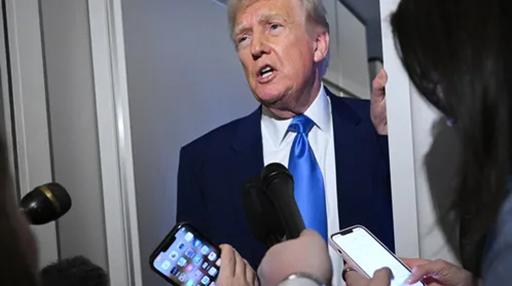
As global markets reel from the aftershocks of former President Donald Trump’s newly proposed tariff regime, the Republican leader has doubled down on his stance, framing the policy as a necessary but bitter remedy for long-term economic health. “Sometimes you have to take medicine,” Trump declared during a recent press briefing, defending his plan to impose sweeping tariffs on imports—a move analysts warn could reshape global trade dynamics and ignite retaliatory measures worldwide.
The Tariff Blueprint: A "Reciprocal" Economic Overhaul
Trump’s proposal, unveiled in early April 2025, calls for a universal 20% tariff on all U.S. imports, a policy his advisors claim could generate trillions in federal revenue while “recalibrating” America’s trade relationships. The plan emphasizes reciprocity: nations deemed “allies” might face lighter levies, while others, particularly those with perceived unfair trade practices, would bear the brunt. This approach, Trump argues, corrects decades of exploitation under globalization, which he claims has disproportionately harmed American workers and industries.
Critics, however, warn of immediate fallout. A study by Aston University Business School projects that global trade could contract by $1.4 trillion due to redirected supply chains and inflated consumer prices. The UK, for instance, might see its GDP shrink by 1% as retaliatory tariffs strain exports and force austerity measures.
Market Turbulence and Political Backlash
Financial markets have reacted with volatility. The Dow Jones Industrial Average plunged 5% in the week following the announcement, while tech stocks—vulnerable to European countermeasures targeting U.S. firms—faced steep declines. Trump dismissed the turmoil as short-term “growing pains,” likening the tariffs to a surgical intervention: “The patient might scream now, but the cure will save their life”.
Political opponents have seized on the chaos. Vice President Kamala Harris, who clashed sharply with Trump in a televised debate last September, criticized the policy as “economic isolationism,” warning it would alienate allies and empower rivals like China 3. Meanwhile, European leaders are reportedly drafting retaliatory measures, including tariffs on American agricultural exports and subsidies for domestic tech sectors to counter U.S. dominance.
Globalization Under Fire
Trump’s tariff push is rooted in a broader critique of globalization—a theme echoed by allies like former Vice President JD Vance. The administration argues that globalization has failed to uplift developing nations or protect Western industries, instead enabling China to dominate manufacturing while flooding Western markets with cheap goods. By retreating from multilateral trade frameworks, Trump aims to force a renegotiation of global economic rules, though analysts caution this could fragment supply chains and accelerate decoupling between major economies.
Historical Parallels and Defiance
This is not the first time Trump has courted controversy to advance his agenda. In 2017, he drew fierce criticism for alleging that predecessors like Barack Obama neglected families of fallen soldiers—a claim debunked by Obama aides but defended by Trump as a reflection of his “straight talk” style. Similarly, his tariff defense mirrors his unyielding rhetoric, framing economic pain as a patriotic sacrifice.
Yet the stakes are higher now. With the 2024 election cycle still fresh—marked by Taylor Swift’s high-profile endorsement of Harris and attacks on Trump’s policies—the tariff debate has become a lightning rod for broader ideological clashes over America’s role in the world.
The Road Ahead
The coming months will test whether Trump’s “medicine” yields recovery or exacerbates the crisis. Key questions loom:
Retaliation vs. Negotiation: Will the EU and China escalate trade wars, or will tariffs pressure them into concessions?
Domestic Impact: Can U.S. industries absorb higher input costs without passing them to consumers already grappling with inflation?
Political Calculus: Will voter frustration over economic strain outweigh support for Trump’s protectionist vision?
As Trump reiterated this week, “History will judge this moment—not the headlines of tomorrow.” For now, the world watches nervously, bracing for a new era of economic uncertainty.