A recent Pew Research Center report has shed light on the political leanings of America's top news influencers, uncovering a notable tilt toward conservative viewpoints. This comprehensive study analyzed the activities and affiliations of 500 influential figures who shape public discourse through their presence on various social media platforms.
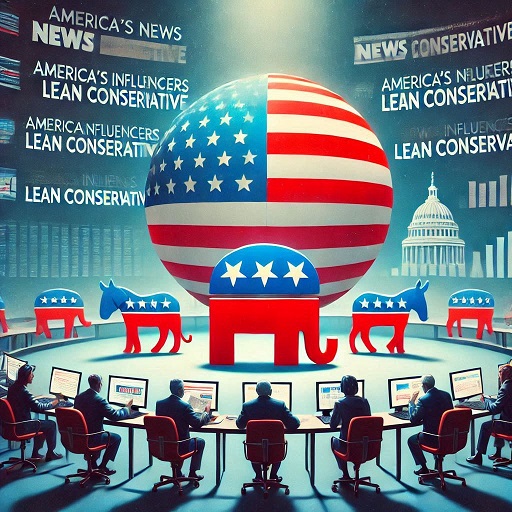
The report highlights several key aspects of these news influencers:
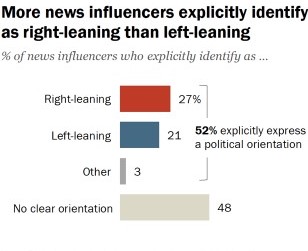
1. Conservative Leanings: Approximately 27% of these influencers identify as Republican, conservative, or pro-Donald Trump. In contrast, 21% align themselves with Democratic, liberal, or pro-Kamala Harris sentiments. This slight conservative skew underscores the diversity of perspectives in the digital news landscape.
2. Gender Representation: The majority of news influencers are men, comprising 63% of the studied group. This gender disparity reflects broader trends observed in media and political commentary.
3. Non-Traditional Backgrounds: A significant 77% of these influencers operate independently, without ties to traditional news organizations. This independence allows them to cater to niche audiences and present unfiltered viewpoints, contributing to their growing popularity.
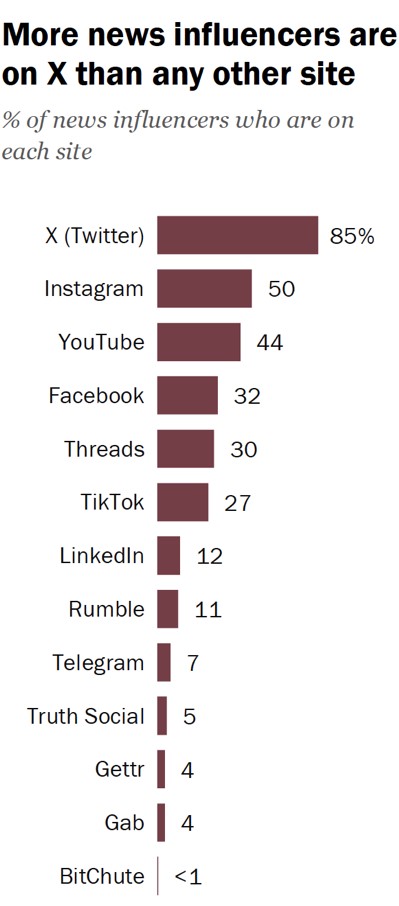
4. Platform Preference: Social media platform X (formerly Twitter) emerges as the preferred medium for these influencers, with 85% maintaining an active presence there. This platform's immediacy and broad reach make it ideal for real-time commentary and engagement.
5. Audience Demographics: About one-in-five Americans, especially younger adults, regularly turn to these influencers for news. This trend highlights a shift from traditional news sources to more personalized and direct forms of information dissemination.
The Pew report's findings have significant implications for the media landscape and public discourse in the United States:
1. Diverse Perspectives: The presence of a considerable number of conservative influencers ensures a wide range of viewpoints in public debates, enriching the discourse with different perspectives and fostering critical thinking among audiences.
2. Impact on Public Opinion: As more Americans, particularly younger generations, rely on these influencers for news, their opinions and biases can shape public perceptions and political attitudes. This underscores the importance of media literacy and critical evaluation of information sources.
3. Challenges for Traditional Media: The popularity of independent influencers poses a challenge to traditional news organizations, which must adapt to changing consumer preferences and find ways to engage with audiences on digital platforms effectively.
4. Policy and Regulation: The influence of social media on public opinion and political outcomes may prompt discussions on policy and regulation, aiming to ensure transparency and accountability in the digital information ecosystem.
A recent study by the Pew Research Center highlights an intriguing trend in the realm of "news influencers" on platforms like YouTube, where politically oriented content creators play an increasingly significant role in shaping public opinion. The research found that conservative voices dominate this space, showcasing the growing impact of independent content creators on the media landscape.
What Are News Influencers?
News influencers are content creators who regularly discuss political and social issues on digital platforms, providing commentary, analysis, and sometimes breaking news. Unlike traditional media outlets, these influencers operate independently, often blending personal opinion with news reporting.
Pew’s report focused on YouTube channels that explicitly identify as news-focused and reach significant audiences. These channels serve as alternatives to mainstream media, appealing to viewers seeking unique perspectives or skepticism of established outlets.
Conservative Leaning Dominates
The study found that a majority of the most-followed news influencers on YouTube skew conservative. Content from these channels often critiques liberal policies, mainstream media, and social movements like climate activism or progressive equity initiatives. By contrast, left-leaning channels make up a smaller portion of the influential landscape.
The conservative dominance in this space reflects broader cultural shifts. Pew researchers noted that conservative creators have effectively leveraged platforms like YouTube to cultivate dedicated followings, frequently citing grievances against perceived censorship or bias by tech platforms.
Audience Engagement and Influence
Conservative channels tend to attract highly engaged audiences. These creators often focus on hot-button issues that resonate deeply with their viewers, encouraging interaction through likes, comments, and shares. This engagement translates into robust communities that amplify the creators' reach.
By contrast, left-leaning creators also foster engagement but often target niche topics or issues like environmental justice, diversity, and inclusion. While impactful, these topics generally attract smaller audiences on platforms like YouTube.
Why the Conservative Edge?
Several factors contribute to the conservative edge among news influencers:
1. Distrust in Mainstream Media: Conservative audiences are more likely to distrust mainstream outlets, driving them to alternative sources.
2. Algorithmic Amplification: YouTube's recommendation system often rewards polarizing content, which conservative influencers frequently utilize to their advantage.
3. Grassroots Appeal: Many conservative influencers frame their content as a fight against elitism or censorship, resonating with viewers who feel alienated by traditional media.
As digital platforms continue to influence public discourse, concerns about misinformation and bias grow. Critics argue that platforms must ensure a balanced representation of viewpoints while maintaining transparency about algorithms and content moderation.
The Pew Research Center report provides valuable insights into the political leanings and characteristics of America's news influencers. While their conservative tilt is notable, the diversity of voices they represent plays a crucial role in shaping contemporary public discourse. As the media landscape continues to evolve, understanding the dynamics of these influencers will be essential for navigating the complexities of modern information consumption.