Recently, a piece of information shared by Meta officials has once again attracted attention: on Facebook, short video ads of 30 seconds or less will automatically loop for up to 90 seconds, which means that shorter video ads may get more exposure!
So, this article will conduct an in-depth analysis the hidden logic behind the automatic looping of Facebook short video ads, and how you can use it to maximize brand exposure and user memory.
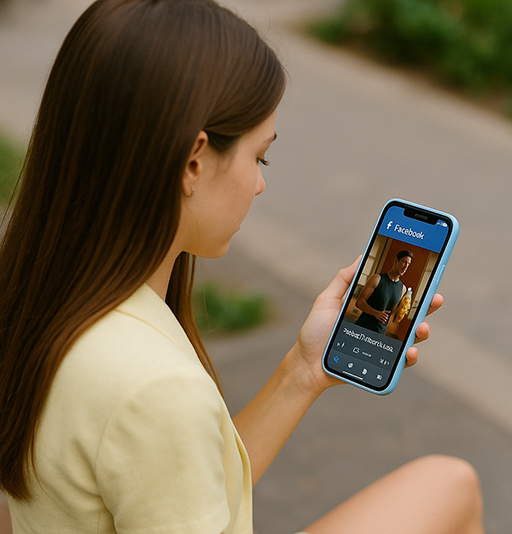
What is the "loop" mechanism of Facebook ads?
Meta officials recently explained the playback logic of Facebook video ads:
"In most cases, video ads that are 30 seconds or shorter will automatically loop after about 90 seconds. Looping means your video will automatically start over again after it ends."
In other words, the playback of a short ad is not counted only once, but will be repeated continuously within 90 seconds. As long as the user does not swipe away or close it, he or she may see your content multiple times!
Example analysis: Comparison of playback times of different video lengths
Example 1: 30-second ad
Playing time: 30 seconds
Can cycle 3 times within 90 seconds
30 seconds x 3 times = 90 seconds
Example 2: 16-second ad
Playing time: 16 seconds
Can cycle 6 times in 90 seconds
16 seconds x 6 times = 96 seconds (closer to 90 seconds, which is better than 80 seconds for 5 cycles)
This means: the shorter your video is, the more views it is likely to receive in the same exposure period.
Practical advice: How to use this mechanism to optimize video ads?
Control the video length within 30 seconds, the best range is 15~20 seconds
If it is too short, it is not conducive to expressing the complete information; if it is too long, it cannot be played repeatedly;
Recommended structure: "Opening brand identification + core selling point + quick call to action (CTA)".
The content is highly repetitive and is designed to be "playable multiple times without getting bored"
Use looping music or metronomic camera rhythms;
Avoid one-time spoiler-type content, and use more symbolic and rhythmic expressions.
Make multiple versions to test the playback effects of different lengths
For example, create 15-second, 20-second, and 30-second versions to see which version has a higher average viewing rate and interaction rate.
Pay attention to user psychological fatigue: high frequency does not mean high efficiency
High repetition frequency may lead to "brand fatigue" or "user disgust". It is recommended to reduce the sense of repetition by adjusting the content rhythm and visual changes.
What does this mean for advertisers?
Although this mechanism may seem trivial, it may be the key point of your next round of advertising optimization if you pay attention to the following dimensions:
1. High frequency of brand information reach
Short videos are played repeatedly within 90 seconds, and users may unconsciously repeatedly accept your brand logo, slogan, and product advantages, thereby deepening their impression.
Here's an example: a 16-second video ad is repeated 6 times, which is equivalent to the user's face being "scanned" 6 times within 90 seconds!
2. Enhance advertising return on investment (ROAS)
For CPC or CPM models, there will be no additional charges for loop playback (provided that the user does not actively click on it), but the visual reach will be amplified several times, which in disguise increases the exposure frequency at unit cost.
3. Accurate scene adaptation: suitable for silent or low-interference playback environment
For example, when the user does not turn on the sound while scrolling through the information stream, the advertisement will still play silently in a loop, which is suitable for concise content design with strong visual impact.
Notes and platform differences
On Instagram, videos will loop regardless of their length, so this mechanism is more suitable for Facebook.
Videos longer than 30 seconds will not loop automatically on Facebook. After playing, only a thumbnail + play button will be displayed, and users need to click it manually.
In addition, Meta also stated:
"In some cases, the loop time of the video will be dynamically adjusted to achieve optimal results, ranging from less than 90 seconds to up to 180 seconds."
In other words, the system will dynamically adjust the loop playback time based on the advertising effect to get you greater advertising value.
Conclusion
While Facebook's short video loop mechanism may sound like just a technical detail, it could be a hidden exposure tool for discerning advertisers.
Remember: the shorter the video, the more your ad is likely to play during the 90 seconds when users don't actively click to skip.
Only by mastering the platform logic and using the right advertising strategy can you stand out in the fierce social platform marketing.
Do you prioritize video length when placing video ads? Do you think short ads are more likely to impress users, or do they convey less information?