Here's an in-depth SWOT analysis of Facebook in 2025, focusing on its strengths, weaknesses, opportunities, and threats.
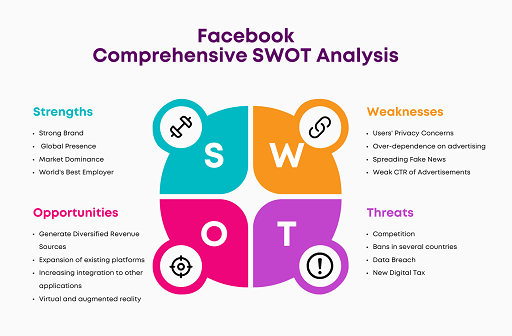
Strengths
1. Strong Brand Recognition: Facebook remains one of the most recognized brands globally, which helps maintain user loyalty and attract new users. Its brand value continues to be high, giving it an edge in the competitive social media landscape.
2. Diverse Revenue Streams: Besides advertising, Facebook has diversified its revenue streams through acquisitions like Instagram, WhatsApp, and Oculus. This diversification helps mitigate risks associated with reliance on a single income source.
3. Extensive User Base: With approximately 2.9 billion monthly active users, Facebook continues to dominate the social media space. This extensive user base is attractive to advertisers and provides a large platform for launching new features and services.
4. Technological Innovations: Facebook continuously invests in technological advancements, including artificial intelligence and virtual reality. This keeps the platform relevant and competitive in the ever-evolving tech landscape.
5. Network Effect: Facebook benefits from the network effect, where the value of the platform increases as more people use it. This makes it difficult for competitors to lure its users away.
Weaknesses
1. Data Privacy Issues: Facebook has faced numerous data privacy scandals, such as the Cambridge Analytica incident. These issues erode user trust and can lead to regulatory fines and penalties.
2. Content Moderation Challenges: Despite efforts to moderate content, Facebook struggles with misinformation, harmful content, and cyberbullying. This can result in negative publicity and user dissatisfaction.
3. Dependency on Advertising: A significant portion of Facebook's revenue comes from advertising. Economic downturns or changes in advertising policies can adversely impact the company's profitability.
4. Regulatory Pressures: Increasing scrutiny from governments and regulators around the world presents a constant challenge. Compliance with varying regulations across different regions adds complexity to Facebook’s operations.
5. Public Perception and Reputation: Negative perceptions about Facebook’s data practices and handling of user information can affect user growth and engagement. The platform needs to continuously work on rebuilding its reputation.
Opportunities
1. Expansion into Emerging Markets: There is significant room for growth in emerging markets where internet penetration is still increasing. By focusing on these regions, Facebook can expand its user base and increase revenues.
2. Integration of E-commerce: Facebook’s push into e-commerce, through features like Facebook Shops and Marketplace, offers new revenue streams1. These initiatives can capitalize on the growing trend of online shopping.
3. Virtual Reality and Augmented Reality: Facebook’s investments in VR and AR technology, particularly through Oculus, present opportunities to tap into new user experiences and markets. This positions Facebook well in the future of the digital experience.
4. Monetization of WhatsApp: There is potential for significant revenue generation through the monetization of WhatsApp, especially in regions where it is widely used for communication and business purposes.
5. Development of New Technologies: Continued investment in AI, machine learning, and other advanced technologies can keep Facebook ahead of competitors and open up new avenues for growth.
Threats
1. Cybersecurity Threats: Hacking and data breaches pose a significant risk to Facebook’s operations and user trust. Continuous investment in cybersecurity is essential to mitigate these threats.
2. Competition: The social media landscape is highly competitive, with platforms like TikTok, Snapchat, and new entrants continually vying for users' attention. This competition can impact Facebook’s user growth and engagement.
3. Regulatory Challenges: Stringent regulations in different countries can limit Facebook’s operations and profitability. Regulatory compliance is a constant challenge that requires significant resources.
4. Changing User Preferences: Social media trends are dynamic, and user preferences can shift quickly. If Facebook fails to adapt to these changes, it risks losing users to more innovative platforms.
5. Public Relations Issues: Negative publicity from data breaches, unethical practices, or controversial policies can harm Facebook’s reputation and lead to user attrition.
While Facebook remains a dominant force in the social media landscape, it must navigate numerous challenges to maintain its position. By addressing data privacy concerns, adapting to regulatory requirements, and leveraging technological advancements, Facebook can continue to thrive and expand in the coming years.