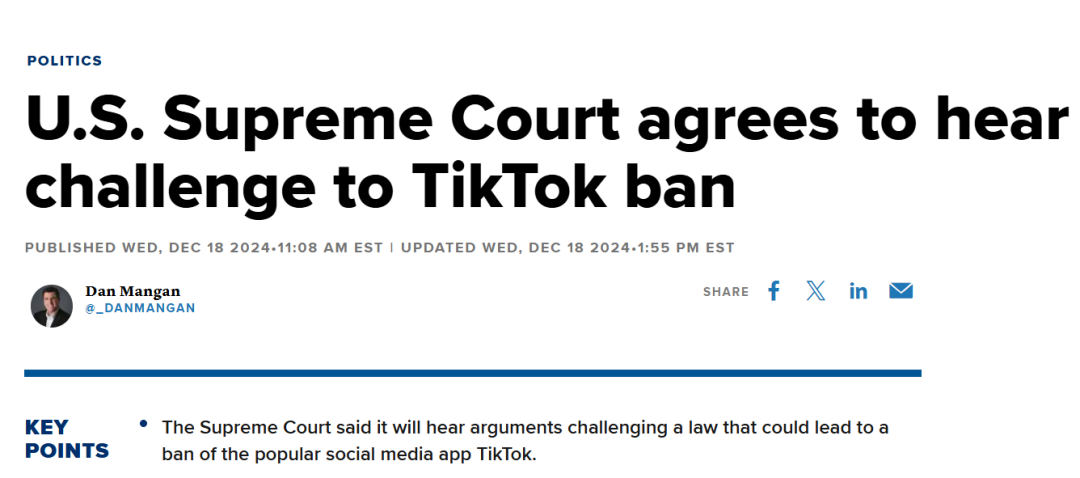
The U.S. Supreme Court has agreed to hear TikTok's challenge to the impending ban. The case will be argued on January 10, 2025, just nine days before the ban is set to take effect on January 19, 2025. TikTok, owned by China-based ByteDance, argues that the ban is unconstitutional and violates the First Amendment, which protects free speech.
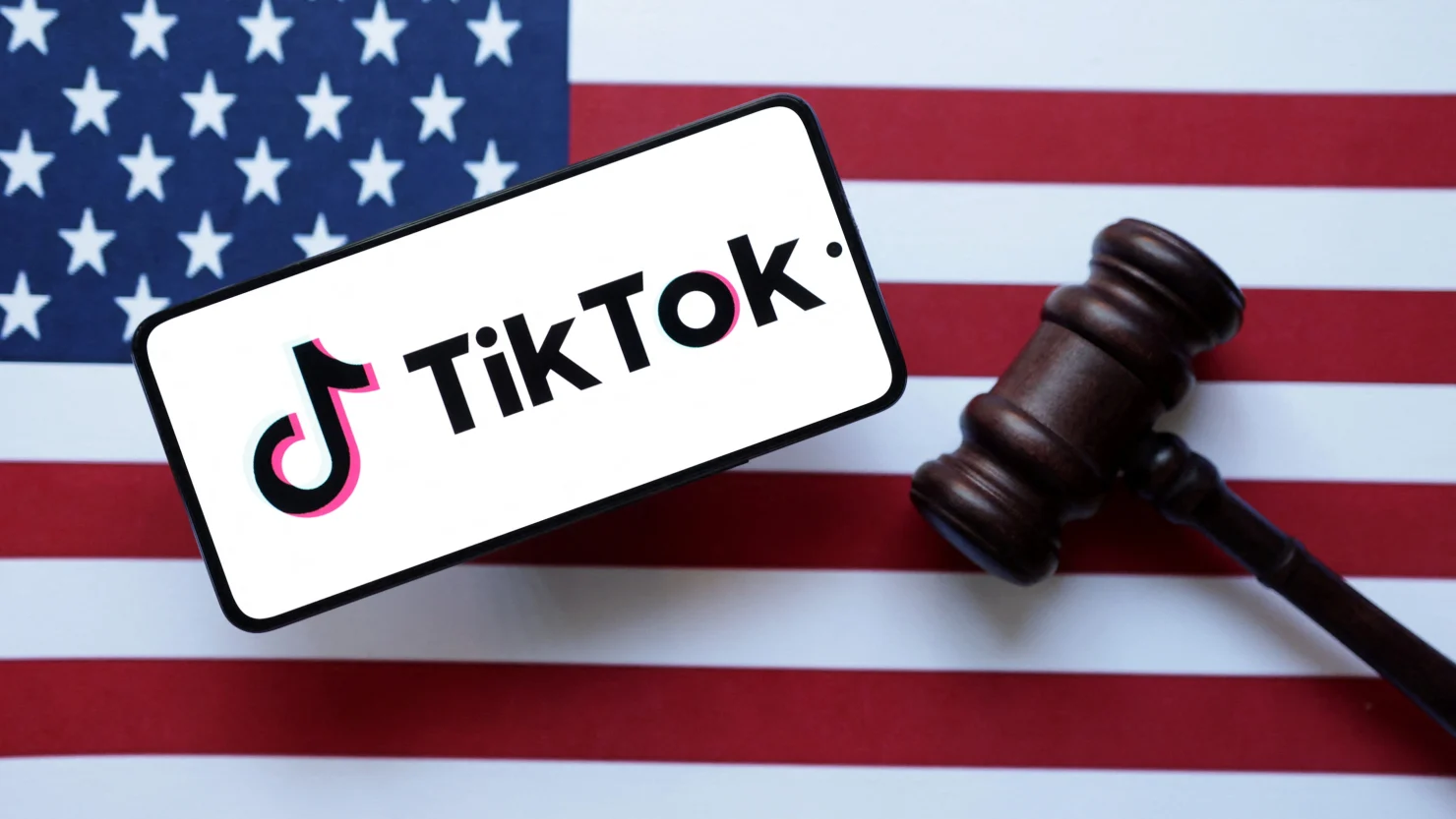
The ban was passed by Congress with bipartisan support due to concerns about national security and potential links between TikTok and the Chinese government. President Biden signed the law in April 2024, which requires ByteDance to either sell TikTok or face a ban in the U.S.
TikTok has faced multiple legal battles to overturn the law, but the U.S. Court of Appeals for the District of Columbia Circuit recently denied TikTok's request to delay the implementation of the ban. This prompted TikTok to turn to the Supreme Court for relief.
The Supreme Court's decision to hear the case is significant, as it only hears a small fraction of the petitions it receives each year. The outcome of this case could have major implications for TikTok's future in the U.S. and for the broader debate over data privacy and national security.
**Scheduled Hearing**
Oral arguments in the case are set for January 10, nine days before the law is scheduled to take effect. The law, known as the Foreign Adversary Controlled Applications Act, requires ByteDance to divest its interest in TikTok or compel platforms like Google and Apple to stop supporting the app in the U.S. The law was passed by Congress due to concerns over national security risks posed by TikTok's Chinese ownership.
**Legal Background**
On December 6, the U.S. Court of Appeals for the District of Columbia Circuit upheld the law, ruling that the Department of Justice provided persuasive evidence that the divestment law is narrowly tailored to protect national security.
**Supreme Court's Decision**
The Supreme Court announced it would hear challenges filed jointly by TikTok, ByteDance, and a group of TikTok users. These users include individuals who produce short-form videos on agricultural issues, parenting, mental health, and advocacy for sexual assault survivors.
**TikTok's Position**
TikTok spokesperson Michael Hughes expressed optimism about the Supreme Court's decision to hear the case. He stated, “We believe the Court will find the TikTok ban unconstitutional, allowing over 170 million Americans on our platform to continue exercising their free speech rights.” TikTok argues that if the ban is implemented, small U.S. businesses using TikTok for marketing could lose over $1 billion in revenue, and content creators could lose nearly $300 million in earnings.
**Injunction Request**
Two days before the Supreme Court's announcement, TikTok filed a petition requesting an injunction to prevent the law from taking effect. TikTok contends that Congress’s attempt to single out the app presents serious constitutional issues that the Court should not allow to stand.
**Next Steps**
The Supreme Court has ordered lawyers for TikTok, ByteDance, the app users, and the Department of Justice to submit briefs and argue whether the law violates the First Amendment. However, the Court did not issue an injunction to block the law from taking effect, opting to consider that request during oral arguments on January 10.
**Political Context**
President-elect Donald Trump met with TikTok CEO Shou Zi Chew at Mar-a-Lago in Palm Beach, Florida, on the same day TikTok requested the Supreme Court to hear its case. Trump, who has shown a favorable stance towards TikTok, indicated that the app had garnered support for him from young voters during the November election. Jeff Yass, one of Trump’s major backers and a significant investor in ByteDance, also has a vested interest in the app's future.
**Opposition and Implications**
Senator Mitch McConnell’s lawyer, Michael Fragoso, opposed TikTok’s request for an emergency injunction, arguing that TikTok's First Amendment claims are meritless. Fragoso suggested that delaying the law’s implementation would not be in the public interest and that TikTok hopes the incoming Trump administration will be more sympathetic to its situation.
The Supreme Court's ruling on this case will be crucial in determining TikTok's future in the U.S. and addressing broader concerns about data privacy and national security.
Do you think the Supreme Court will rule in favor of TikTok, or do you believe the ban will go through?