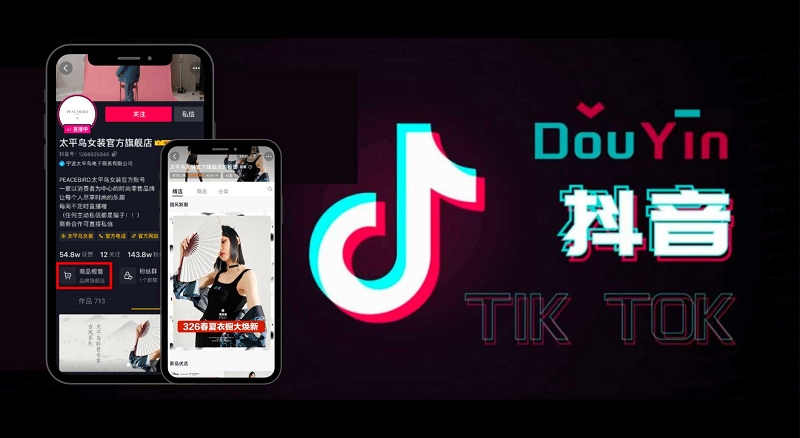
And did you know that TikTok has just passed 3.5 billion downloads? Almost half as many people as there are on this planet? That TikTok users use the app for a startling average of 1 hour 35 minutes every single day. Or that in 2021, the company quietly changed their terms and conditions to allow them to collect your biometric data. Using your camera and your microphone to learn how you react to certain content through your expressions and vocal responses like laughing. But we are just getting started. So here are 37 more things that you didn't know about this app. Getting more and more bizarre as we go. If you ever wondered why the TikTok logo looks like this, it's two things. It's a musical note because music is a key part of TikTok content. And it's also the letter D. And that's because TikTok was not built from scratch.
It was actually cloned from an existing Chinese app called Doiying. Doiying was launched in 2016 by the company Bite Dance. And it became very clear that this whole concept of short form vertical videos was a goal-mind. But there was one problem. The strict way that China's census content and controls what Canon can't be shown wouldn't have allowed the app to flourish internationally. And likewise, a lot of the more controversial international content would most likely get the app banned in China. So they split the app into two and created TikTok, which works in the exact same way, but you just can't see any of the content from Doiying on it. And then the masterstroke was that instead of starting TikTok off from scratch and just hoping it became a hit abroad, Bite Dance decided to acquire a similar app at the time called Musical E.
that was popular in the United States and then just swap their app for TikTok. So the 80 million accounts that people already had on musically, the next time they opened the app, it just became TikTok users, whether they liked it or not. While there's no denying the intelligence of the people who made TikTok, do have some doubts about some of the uses. Here are the five dumbest, most dangerous challenges that have spread on the platform. Oh, and please don't try any of these at home. Or, anyway, really. First of all, it's the penny challenge where kids on TikTok were plugging adapters halfway into wall-sockets so that the electrical pins were exposed and then pressing a penny against the... At best, this is a huge fire hazard. At worst, you could be killed by electrocution. The sole challenge isn't any better, which involves pouring salt into your mouth for several seconds and trying to swallow it all without coughing it everywhere.
Which, sure, I mean, it looks kind of funny, but your body can only handle so much sodium at any one time. And the sudden spike from doing this can cause dehydration, confusion, nausea, and even a stroke. For those with even less of a regard for their personal safety, we have the fire challenge. Where you draw shapes on a mirror with fire accelerants like rubbing alcohol or hairspray and then you set it on fire. Which resulted in countless teens being hospitalized, including one 13-year-old who was left with burns on over 35% of the body. The back cracking challenge involves locking arms at someone else back to back, and then once they start leaning forward, you're back in stretch and make cracking sounds. It was designed to be some sort of therapeutic experiment, I guess. But random teens on TikTok aren't chiropractors, as much as they seem to want to be.
And messing with your spine in a non-controlled way can very easily lead to permanent damage. But then, every now and again, a challenge does exactly what it says on the tin, like the skull breaker challenge. The idea is that three people stand in a line and the person in the middle jumps. While they're in the air, the other two will then kick their feet, sending them crashing to the ground head first with no way to catch themselves. This can easily end your life, and many, many teenagers were hospitalised after participating when it was trending in 2020. Now, I hear what you're thinking right now. If they're obviously so dumb and dangerous, why do challenges like this spread on TikTok? Well, the algorithm. Of all social media platforms, not one of them has an algorithm that is A, as intelligent as TikToks, and B, as mercilessly optimised for engagement, even potentially at the cost of its use as well being.