This audio is auto-generated. Please let us know if you have feedback.
Amid questions around the impact and value of its artificial intelligence projects, Meta has recruited a new bipartisan political team to try and sway U.S. politicians to its side.
According to a report from Axios, Meta hired or promoted a range of senior executives in order to win favor with both sides of the political aisle.
New appointments include:
Michael Hacker, a longtime aide to Democratic Representative Jim Clyburn
Nick Schmit, a former aide to Biden Commerce Secretary Gina Raimondo
Josh Raffel, a former Trump aide and administration senior official
Pat Trueman, a former senior official on Trump’s 2024 campaign
Brian Rice, a former aide for Democratic Secretary of State John Kerry
Tucker Bounds, a former spokesperson for the McCain 2008 presidential campaign
C.J. Mahoney, former Trump administration official
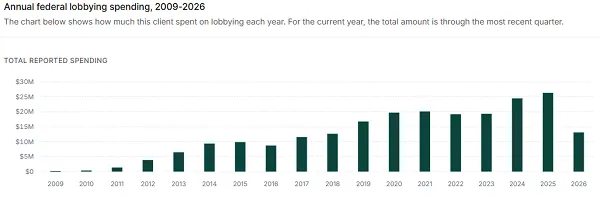
Employing former political officials is nothing new for major corporations, though the rate of Meta’s steadily increasing political spend is notable.
As reported by Open Secrets, Meta spent $26.29 million on federal lobbying in 2025, with both 2024 and 2025 seeing big spending jumps on this element.
Clearly, the company is concerned about potential restrictions and impacts, which is why it’s working to win favor in any way that it can.
Axios also reported that Meta President Dina Powell McCormick met with the Democratic House Commission on Artificial Intelligence in August to discuss the company’s evolving AI strategy, including its major infrastructure spending.
Meta said it works proactively to address these concerns as part of each data center build-out. But questions remain as to the viability of these projects and the value that they may or may not bring to these regions.